Ottoman
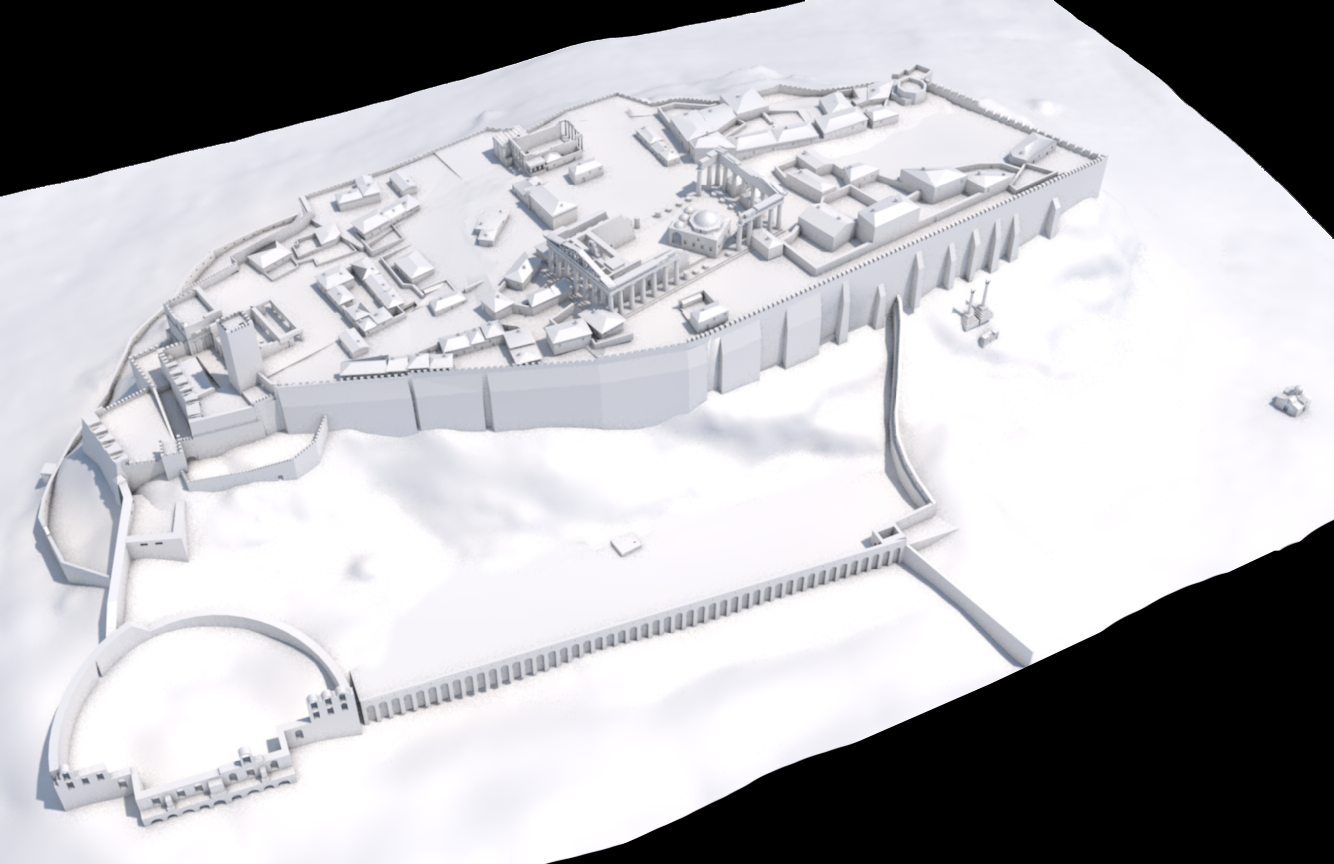
During the Ottoman period (1458–1833), the Acropolis was transformed into a formidable and impregnable fortress. The perimeter fortifications were strengthened with the construction, around the end of the 17th century, of the Serpentzes and, in the mid-18th century of the Wall of Hypapante, on the southern and northwestern slopes of the hill respectively. At the western approach, an exceptionally strong defensive system had developed, comprising an inner wall with a tower and three successive lines of bastions equipped with gun batteries, between which the sole access road into the fortress followed a winding course.
On the plateau of the rock, the dwellings of the soldiers of the Ottoman garrison had developed into a small settlement. The Classical monuments rose among them, some of which were in remarkably good condition until the 17th century. This situation changed dramatically with the explosion at the Propylaia in 1640 and, above all, with the catastrophic explosion of the Parthenon during the Venetian bombardment of 1687. In the early 19th century, the destruction of the monuments intensified with the removal of their architectural sculptures by Lord Elgin and, subsequently, with their bombardment during the two sieges of the Acropolis (1821–1822, 1826–1827), in the course of the Greek War of Independence.