Roman
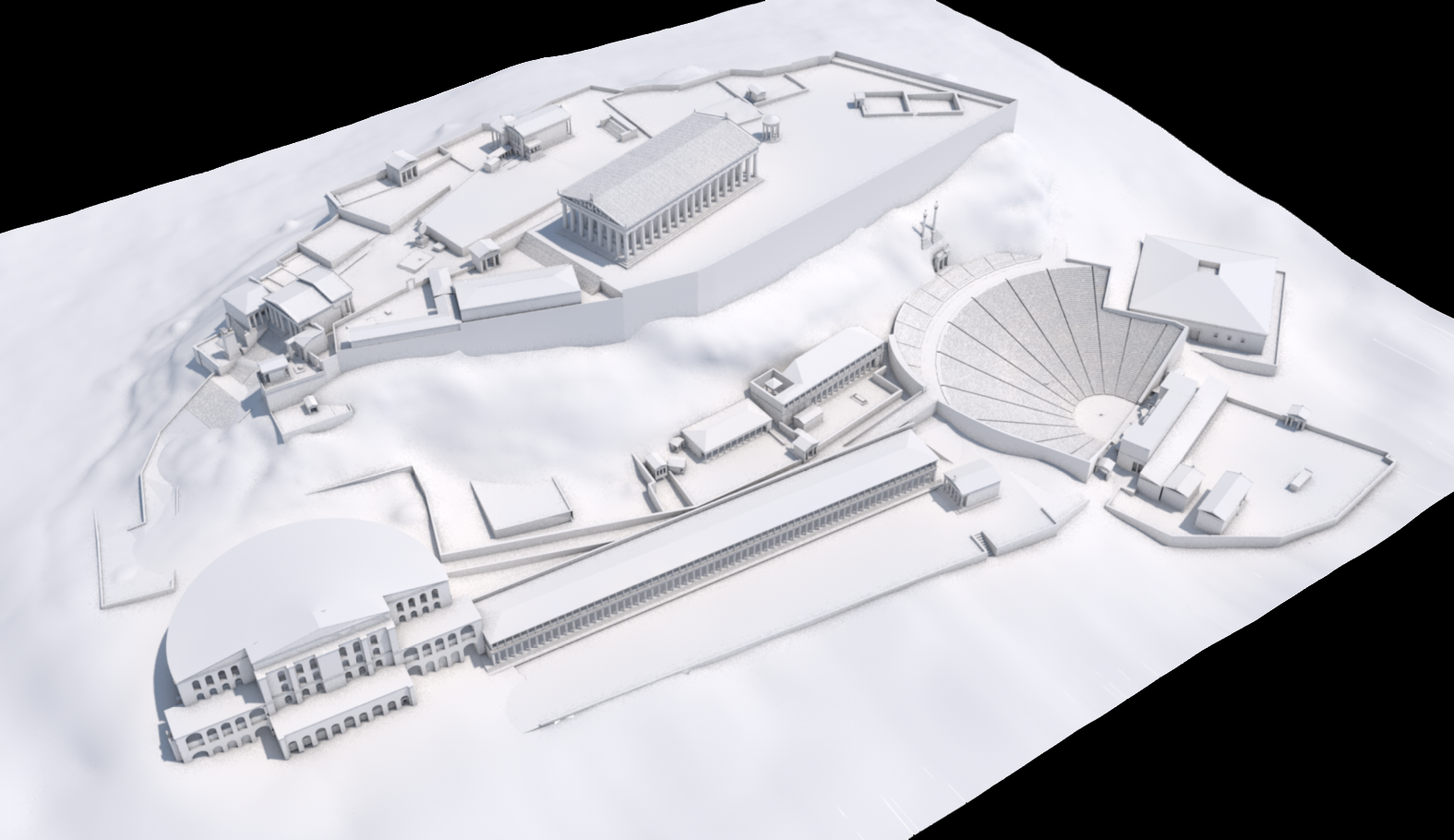
By the 2nd century AD, the Sanctuary of Athena on the Acropolis and its immediate surroundings had reached the fullest extent of their architectural development. The sanctuary on the summit of the hill, an object of admiration and worship for the Macedonian kings, the Hellenistic rulers, and the Roman emperors alike, had been adorned with numerous dedications, among which the splendid sculptural groups set up by the rulers of Pergamon stood out. The buildings of the Classical period were repaired, a new temple was added for the cult of Roma and Augustus, while the western approach to the Propylaia was radically remodelled through the construction of a monumental staircase. Meanwhile, the southern slope of the Acropolis had been completely reshaped through successive architectural renovations of the Sanctuary and Theatre of Dionysos Eleuthereus, together with the construction of impressive new buildings over several centuries, including numerous choregic monuments in the 4th and 3rd centuries BC, a magnificent two-storey stoa in the 2nd century BC, and a vast roofed Odeion in the 2nd century AD.