The Parthenon with a Mosque in the interior
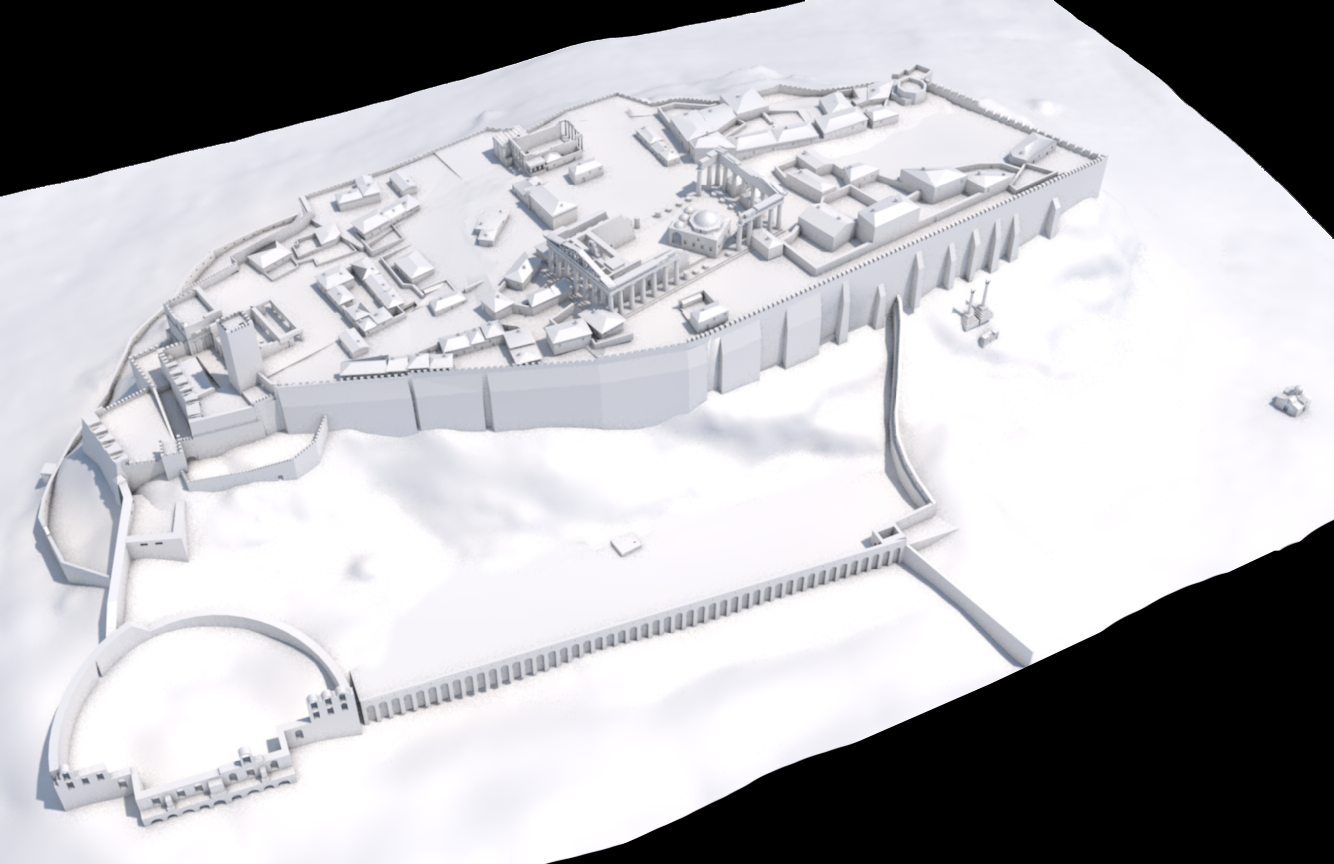
The Parthenon with a Mosque in the interior
The Parthenon, which had been converted into a mosque during the seventh decade of the 15th century, remained one of the best-preserved buildings of antiquity into the last quarter of the 17th century, as documented by descriptions and depictions by 17th-century travellers.
The greatest destruction in the history of the monument occurred on the evening of 26 September 1687, during the siege of the Acropolis by the forces of Francesco Morosini, in the course of the Venetian–Ottoman War of 1684–1699. The Venetian bombardment caused the explosion of the gunpowder that the Ottomans had stored inside the Parthenon. Three of the four walls of the cella collapsed almost entirely, together with six columns on the south side and eight on the north, as well as what remained of the east porch, except for a single column. The roof covering the cella was destroyed and was not rebuilt. The explosion was followed by a fire and, after the surrender of the Acropolis to the Venetians, the latters’ attempt to detach sculptures from the west pediment caused further losses.
Following the brief Venetian occupation and the return of the Ottomans, the marble blocks brought down by the explosion, which formed large heaps inside and around the monument, began to be removed and used as raw material for the production of lime, which was employed to repair sections of the Acropolis fortification walls that had collapsed. The removal of part of this material from the interior of the temple provided the space required for the construction of a small mosque iin the late 17th or early 18th century. The building, with overall dimensions 12.20 × 16.50 m, comprised a square domed prayer hall and a portico (revak) roofed with three hemispherical domes. Oriented towards Mecca, it was set diagonally in relation to the ancient temple, on a northwest–southeast axis.