Sanctuary of Pandion
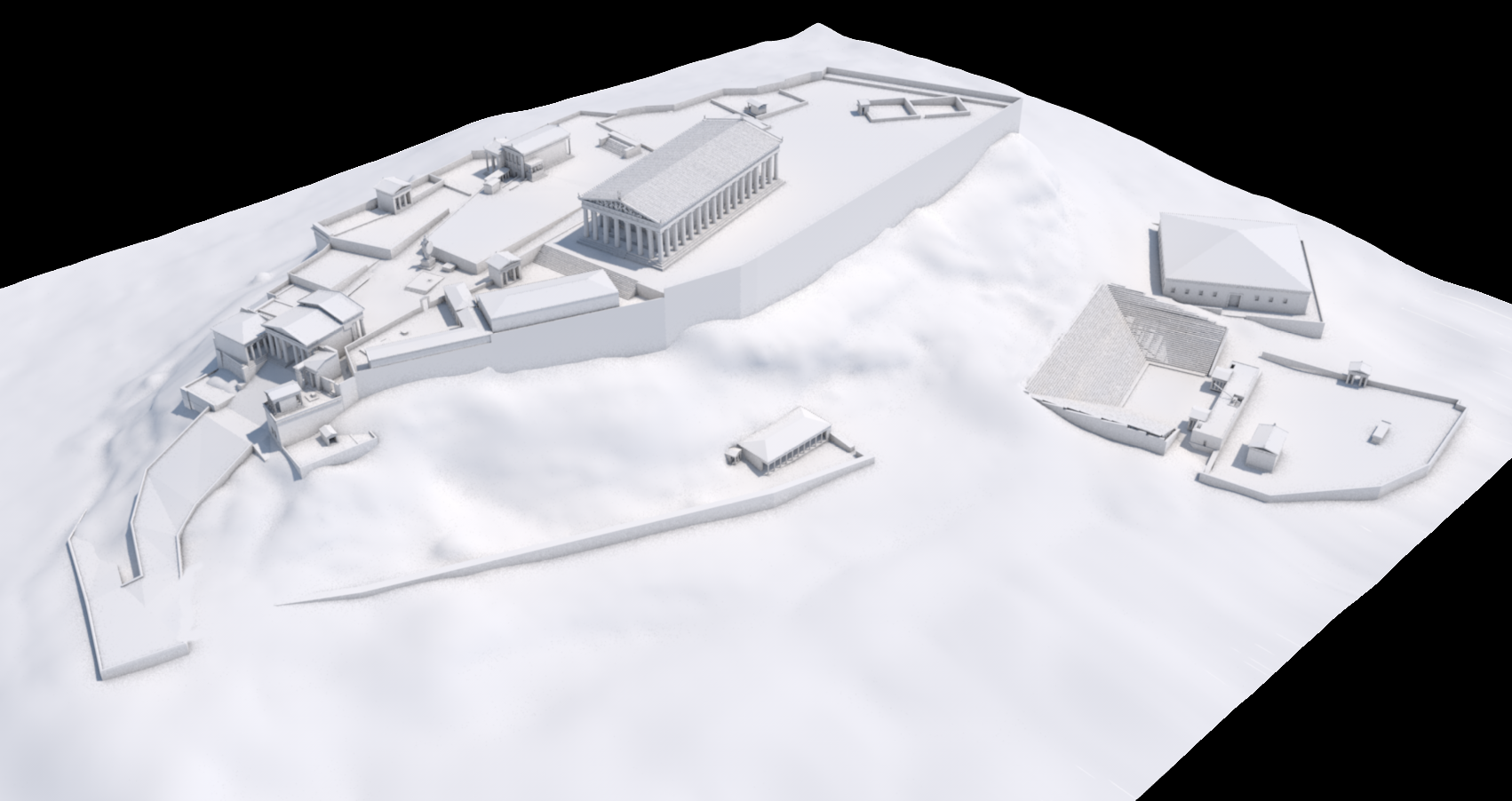
Sanctuary of Pandion
East of the Parthenon, at the easternmost edge of the Acropolis plateau, rock cuttings, traces of poros foundations and sections of walls survive, belonging to two rectangular open-air enclosures set side by side, with a general NW–SE orientation and overall dimensions of approximately 38 × 15 m. The western enclosure, more carefully constructed, was entered from the west through a tetrastyle propylon and is generally identified, on the basis of Classical-period inscriptions and a brief reference by Pausanias, with the sanctuary of Pandion. A statue of Pandion, the mythical king of Athens, probably stood within it. Following the reforms of Kleisthenes, Pandion became the eponymous hero of the Pandionis, one of the ten Athenian tribes. The Pandia were celebrated in his honour, a civic festival dedicated to Zeus that followed the Great Dionysia in the month of Elaphebolion (mid-March to mid-April). The eastern enclosure, built with less care and partly over earlier remains and the Mycenaean fortification wall, was entered through a simple opening on its southern side. Given the large quantity of marble fragments found within it, it is thought to have served as a working area, possibly one of the workshops in which the sculptors of the Parthenon worked.