Arrephorion
Arrephorion
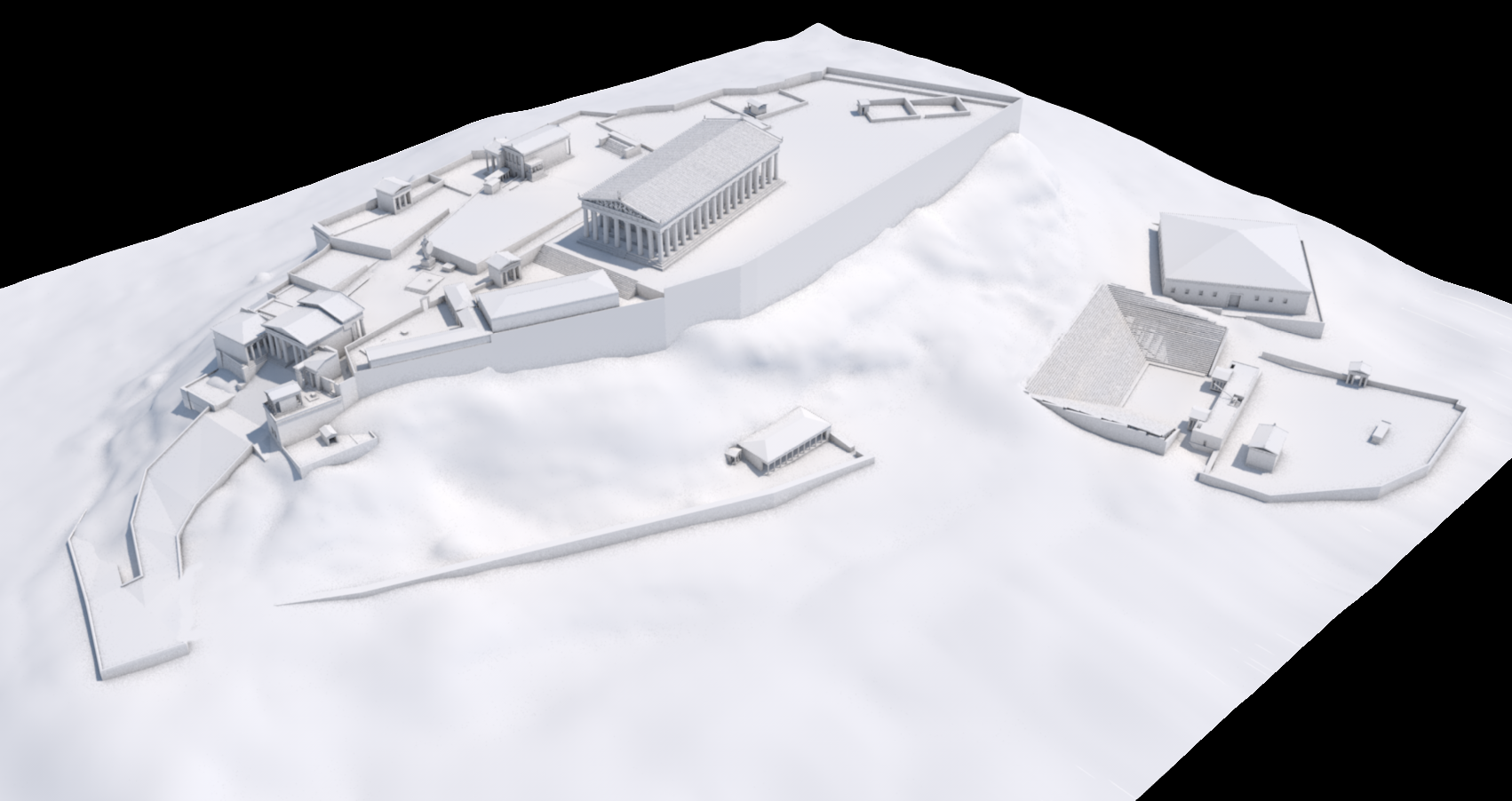
Building complex northwest of the Pandroseion, adjoining the north wall of the Acropolis, whose Classical arrangement dates to the late 5th century BC. At that time, the complex measured approximately 45 × 15 m overall. In its eastern part stood a square building open to the south and with a distyle in antis porch, while immediately to the west, and adjoining it, extended an elongated open-air enclosure. At the northwestern corner of the eastern room, adjoining the north wall, was a concealed stepped passage within a fissure in the rock, leading down to the north slope of the Acropolis.
The presence of this stairway and the monument’s location near the Erechtheion led to its identification as the House of the Arrephoroi, the young girls, approximately 7–11 years old, who were selected annually from the aristocratic families of the city to assist in weaving the peplos of Athena Polias, with which worshippers clothed the goddess’s cult wooden statue during the Panathenaic festival. Their term of service lasted approximately one year and ended with the celebration of the Arrephoria. On the night of the ritual, the Arrephoroi received from the priestess of the goddess, in complete secrecy, the covered sacred objects known as the arrheta and carried them through the aforementioned secret passage outside the Acropolis, probably to the sanctuary of Aphrodite and Eros. There they left what they had carried and received other covered sacred vessels, which they brought back to the Acropolis.