Perimeter Walls
Perimeter Walls
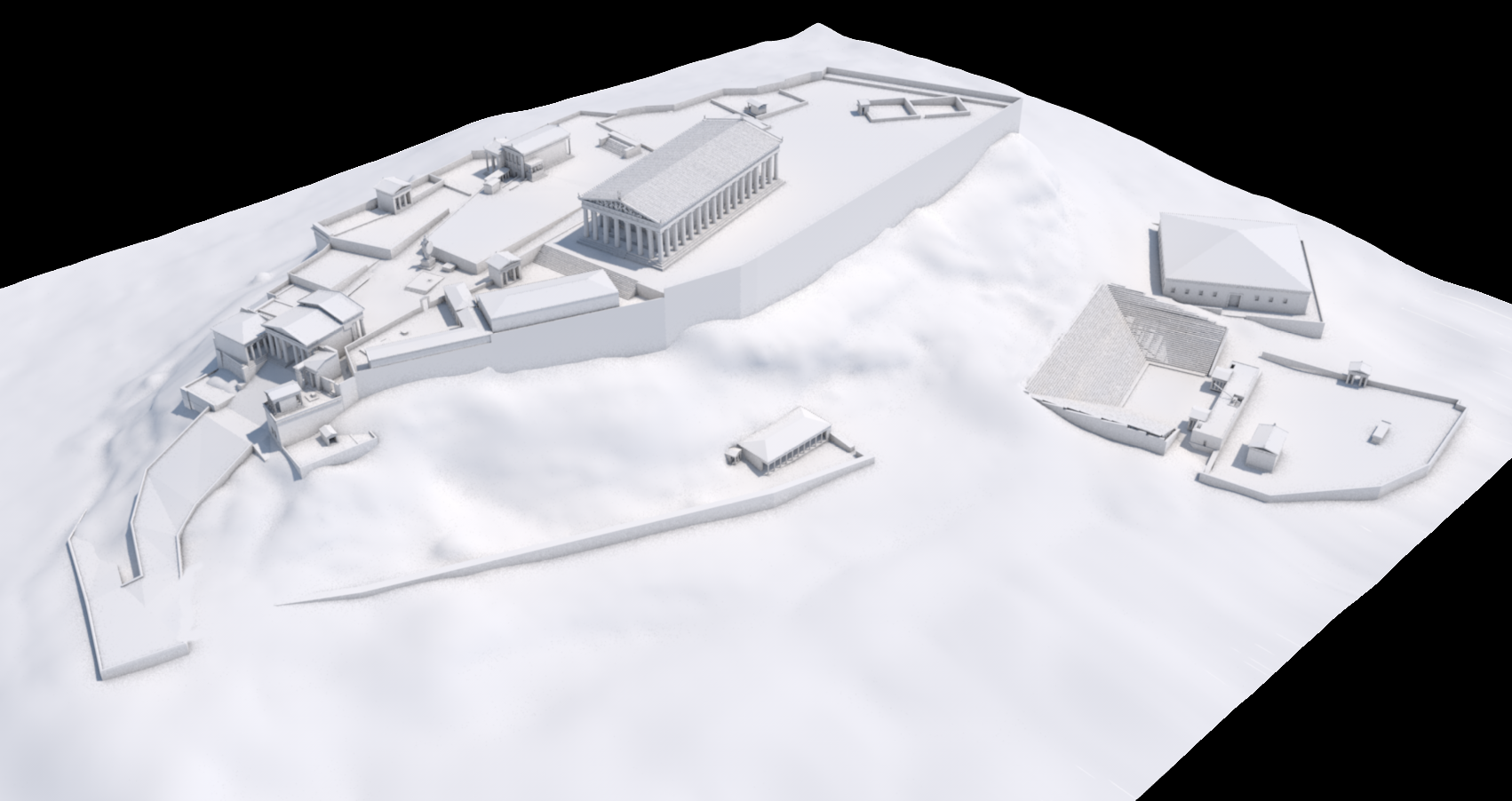
Following the destruction of the Acropolis by the Persians in 480 BC, a new circuit wall was gradually constructed of large rectangular dressed blocks of Piraeus limestone, laid for the most part in regular isodomic courses. The north wall was built on the initiative of Themistocles immediately after the Persian Wars, around 480–479 BC. Architectural members from monuments destroyed during the Persian sack of the Acropolis sanctuary in 480 BC were incorporated into it in a deliberately organized manner. These included marble blocks from the crepidoma of the destroyed Pre-Parthenon, twenty-six unfinished unfluted marble column drums, poros capitals from the Old Temple of Athena Polias, and members of its entablature arranged in a continuous series. Their prominent placement, visible from the Agora, had a strong symbolic character, serving as a permanent reminder of the Persian destruction.
The south and east walls date to the time of Cimon and were constructed after the Athenian victory at the Eurymedon in 466 BC. As in the north wall, the rectangular poros blocks of the southern section of the circuit wall were combined with earlier building material. In addition to its defensive function, the south wall also served as a massive retaining structure, holding back a large volume of fill that significantly extended the surface of the Acropolis plateau towards the south.