Parthenon
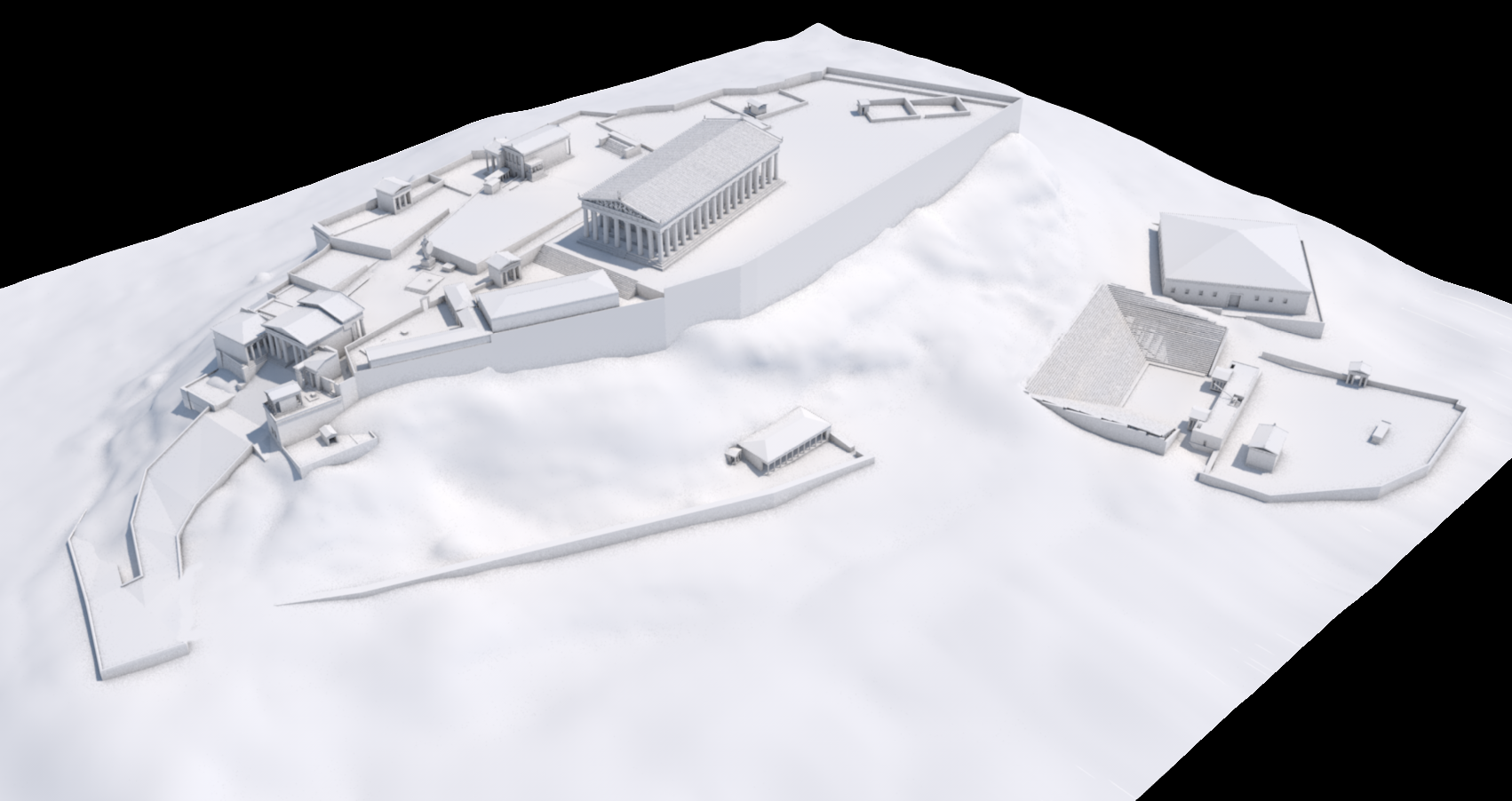
Parthenon
Large peripteral, amphiprostyle Doric temple of Pentelic marble, designed by the architects Iktinos and Kallikrates and constructed between 447 and 438 BC, while its sculptural decoration, executed by a group of leading sculptors under Pheidias, was completed in 432 BC. It represents the foremost architectural achievement of Pericles’ building programme and the most important temple of Classical Athens. Built on a three-stepped crepidoma, the temple measured 69.50 × 30.88 m and was surrounded by a peristyle of 8 × 17 Doric columns. On the east and west sides, the cella had hexastyle Doric porticoes. The cella was divided into two unequal sections that did not communicate with one another. The larger eastern section was entered from the pronaos through a large doorway, with two windows, one on either side, admitting light into the interior. It housed the colossal 12 m-high chryselephantine statue of Athena Parthenos by Pheidias, framed by a two-tiered Π-shaped Doric colonnade. The western chamber was accessible from the opisthonaos. Four tall columns inside supported its ceiling. The chamber was used to house the city’s state treasury as well as valuable dedications and spoils. An Ionic frieze ran around the exterior of the cella and across the two inner porticoes. The entablature of the peristyle carried ninety-two metopes alternating with triglyphs. The temple had a pitched roof covered with marble tiles. Along the long sides were palmette antefixes, while marble lion-head waterspouts occupied the four corners. Large marble palmettes crowned the pediments, with figures of Nikai at the corners.
Large mythological compositions occupied the two pediments: the east pediment, above the main entrance to the temple, represented the birth of Athena from the head of Zeus, while the west pediment showed the contest between Athena and Poseidon for the patronage and naming of the city. The metopes displayed a different mythological subject on each side: the Gigantomachy on the east, the Amazonomachy on the west, scenes from the sack of Troy on the north, and the Centauromachy on the south. The Ionic frieze depicted in relief the magnificent procession of the festival of the Great Panathenaia.