Erechtheion
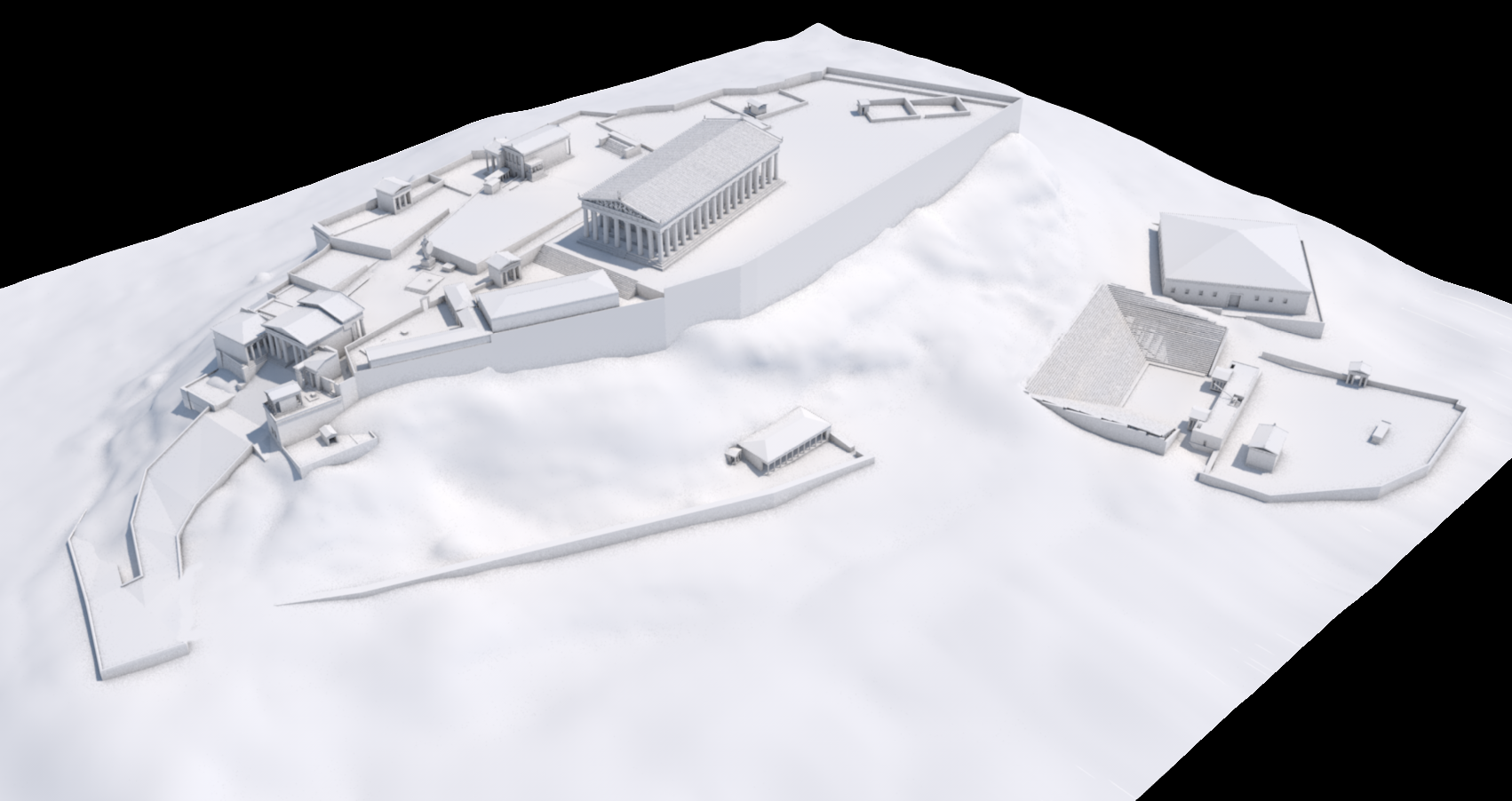
Erechtheion
Ionic building in the northern part of the Acropolis, erected between 421 and 406 BC to house some of the city’s most ancient and important cults. Measuring 22.76 × 11.63 m, the monument has an exceptionally complex and asymmetrical layout, adapted both to the difference in ground levels and to the need to accommodate the two principal cults of Athena and Poseidon, together with other sacred places.
On the east side stood a hexastyle Ionic portico on a podium, with two windows, one on either side, through which access was gained to the sanctuary of Athena Polias. Here were kept the ancient wooden cult statue of the goddess, which had been transferred from the Old Temple of Athena Polias, the gold lamp made by Kallimachos, and other precious dedications. The western section of the temple, approximately 3 m lower, was associated with the cult of Poseidon, who was identified with the mythical king Erechtheus. The area also contained the altars of Hephaestus and Boutes, the brother of Erechtheus, as well as other sacred places, including the marks traditionally believed to have been left by Poseidon’s trident in the rock and the salt-water spring that had gushed forth from its blow when he competed with Athena for possession of the city, the marks of the thunderbolt of Zeus that killed Erechtheus, and the tomb of King Erechtheus. Access to this area was from the north, through a Π-shaped propylon with four Ionic columns across the front and one on each side, richly decorated with carved ornament. The frame of the doorway leading into the interior of the building was similarly decorated, while the ceiling had polychrome coffers. Externally, the west side had four Ionic half-columns set above a high parapet, with the openings between them, except for the southernmost one, closed by grilles. On the south side is the small Porch of the Caryatids. Instead of columns, its roof was supported by six marble statues of maidens, the celebrated Caryatids, possibly works by Alkamenes or Kallimachos, who acquired their name through their later association with the maidens of Karyai in Laconia, who danced in honour of Artemis. On the west side of the podium of the porch, a small opening led towards the area of the tomb of King Kekrops.
Along the upper parts of the walls and porches of the temple ran an Ionic frieze of grey Eleusinian limestone, probably depicting scenes associated with the mythical kings of Athens.