Late Roman Wall
Late Roman Wall
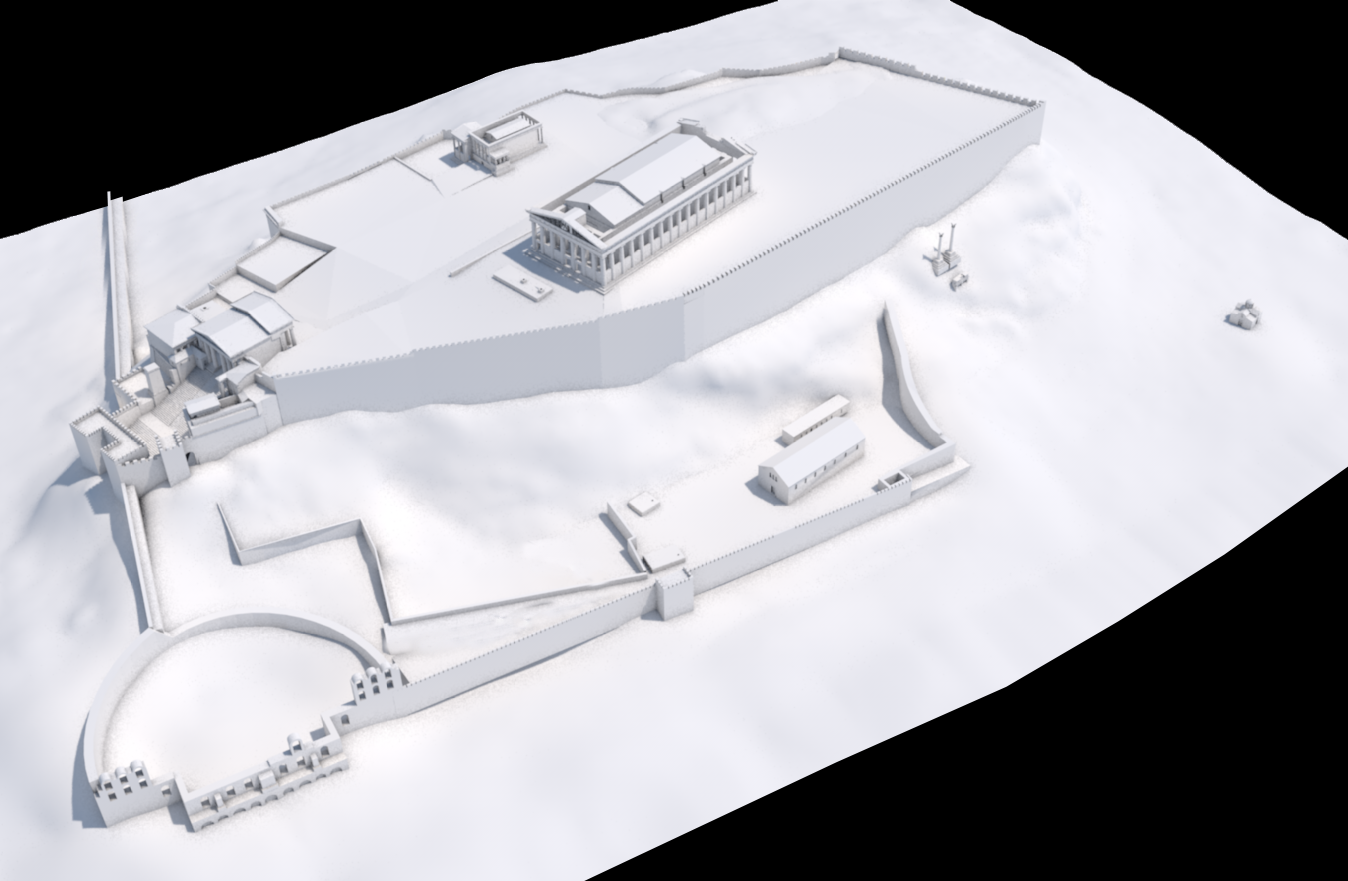
Fortification wall of Athens, constructed after the Herulian invasion of AD 267, with extensive use of reused ancient building material, including fragments of architectural members, inscriptions, and sculptures. Gates opened at intervals along the wall, aligned with streets of the ancient city, while the fortification was reinforced in places by rectangular towers. The western side of the wall began in the area of the Propylaea and followed the eastern side of the Panathenaic Way, incorporating sections of pre-existing buildings and stoas in the Agora. It then turned eastwards, including in its course Hadrian’s Library, before continuing towards the Acropolis. On the southern slope, the wall incorporated sections of the retaining walls of the Theatre of Dionysus and the Stoa of Eumenes, as well as the southern wall of the Odeion of Herodes Atticus. In the 12th century, the wall may have survived in places in a ruinous state, as literary sources of the period describe Athens as an “unwalled city.”