Sanctuary of Dionysus
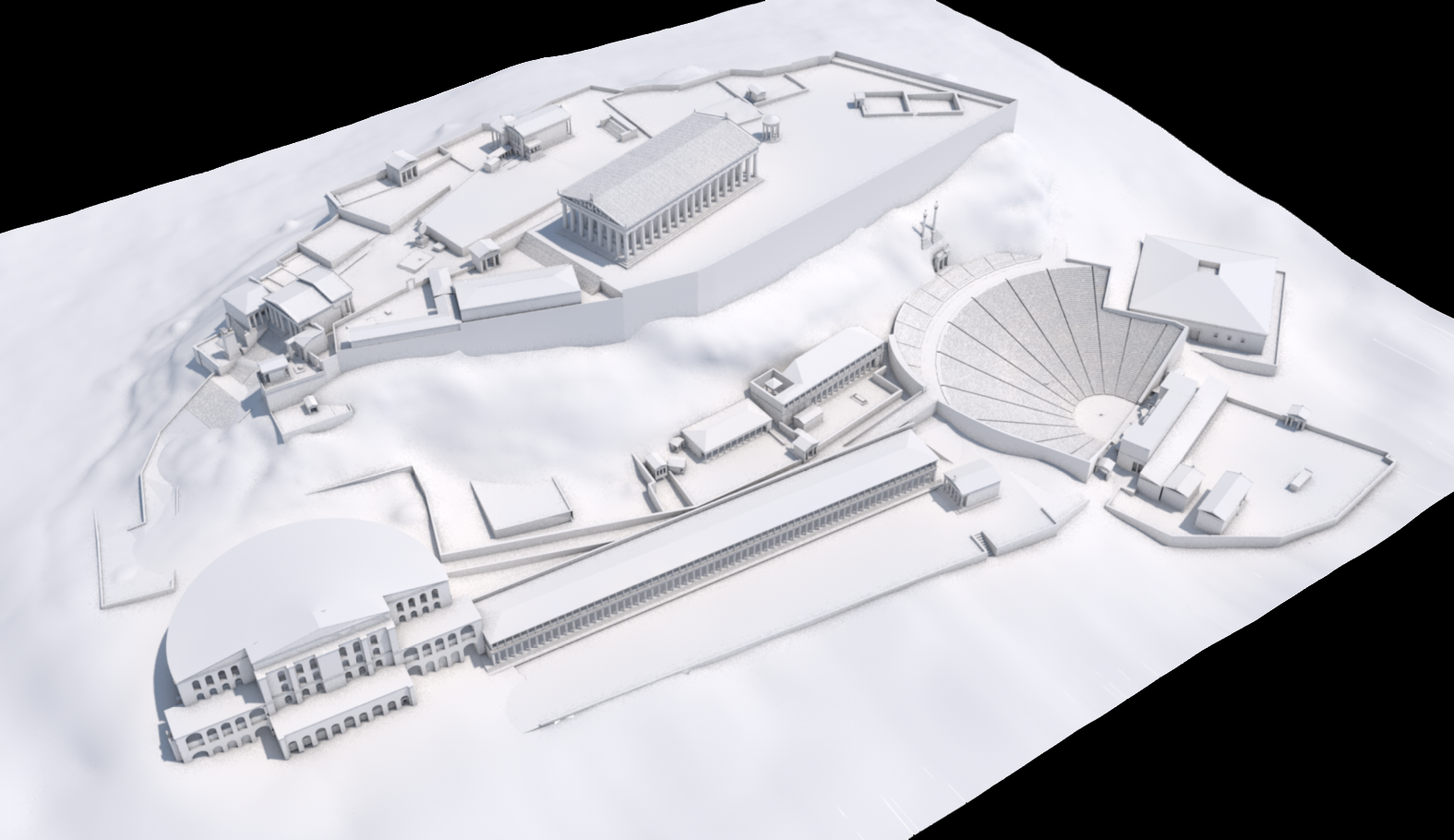
Sanctuary of Dionysus
The Sanctuary of Dionysus Eleuthereus occupied an area at the southern foot of the Acropolis, south of the Theatre of Dionysus. The cult of the god was introduced to Athens from Eleutherai during the rule of the Peisistratids.
During the 4th century BC, as part of the reorganisation of the sanctuary under Lycurgus, the earlier gateway to the sanctuary was replaced by a new monumental propylon with a double Π-shaped plan. In the same period, the later Temple of Dionysus was erected approximately six metres south of the Archaic temple. Measuring 21.95 × 9.30 m, the building was, according to most scholars, Doric in order, while a tetrastyle porch appears to have been added during a subsequent building phase. According to Pausanias, the temple housed a chryselephantine statue of the god by Alkamenes. To the southeast of the temple are the foundations of a rectangular cult altar dating to the 4th century BC.
Along the northern side of the sanctuary, behind the stage building of the theatre, a large Doric stoa was constructed, approximately 62 m long and 8 m wide. It was probably single-storeyed and had an enclosed room at its western end. The stoa was built to serve the needs of the sanctuary and to shelter those present from adverse weather conditions.