Parthenon
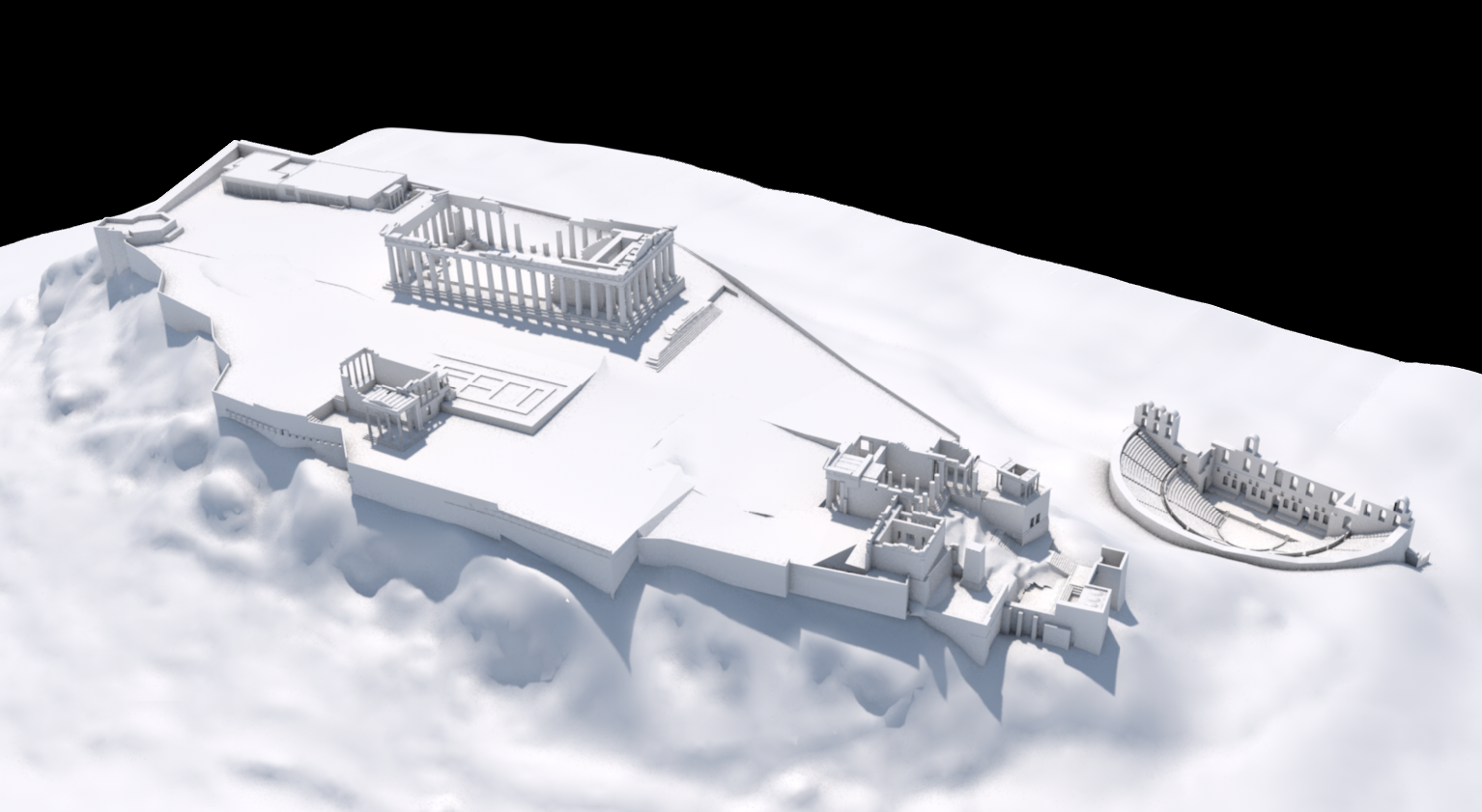
Parthenon
After the Battle of the Granicus (334 BC), Alexander the Great dedicated to Athena Polias three hundred sets of armour taken as spoils from his victory. This dedication is associated with the mounting of fourteen large shields, approximately 1.25 m in diameter, on the eastern architrave of the Parthenon, where traces of their fixings are still preserved. On the other sides, 42 slightly smaller shields were positioned. During the 1st century AD, repairs were carried out on the east pediment following earthquake damage. In AD 61/62, a monumental honorary inscription for the emperor Nero, approximately 25 m long, was mounted on the eastern architrave of the Parthenon, with bronze letters fixed to the marble and arranged between the shields that already adorned the temple façade. The inscription was dedicated by the Council of the Areopagus, the Council of the Six Hundred and the People of Athens, probably to mark the successes of the Roman forces in Armenia during the war against the Parthians. The inscription was removed after Nero’s fall in AD 68, but its fixing holes are still preserved in the marble. In the 2nd century AD, Pausanias records that a statue of the emperor Hadrian stood in the cella of the temple, beside the chryselephantine statue of Athena Parthenos.