Odeion of Herodes Atticus
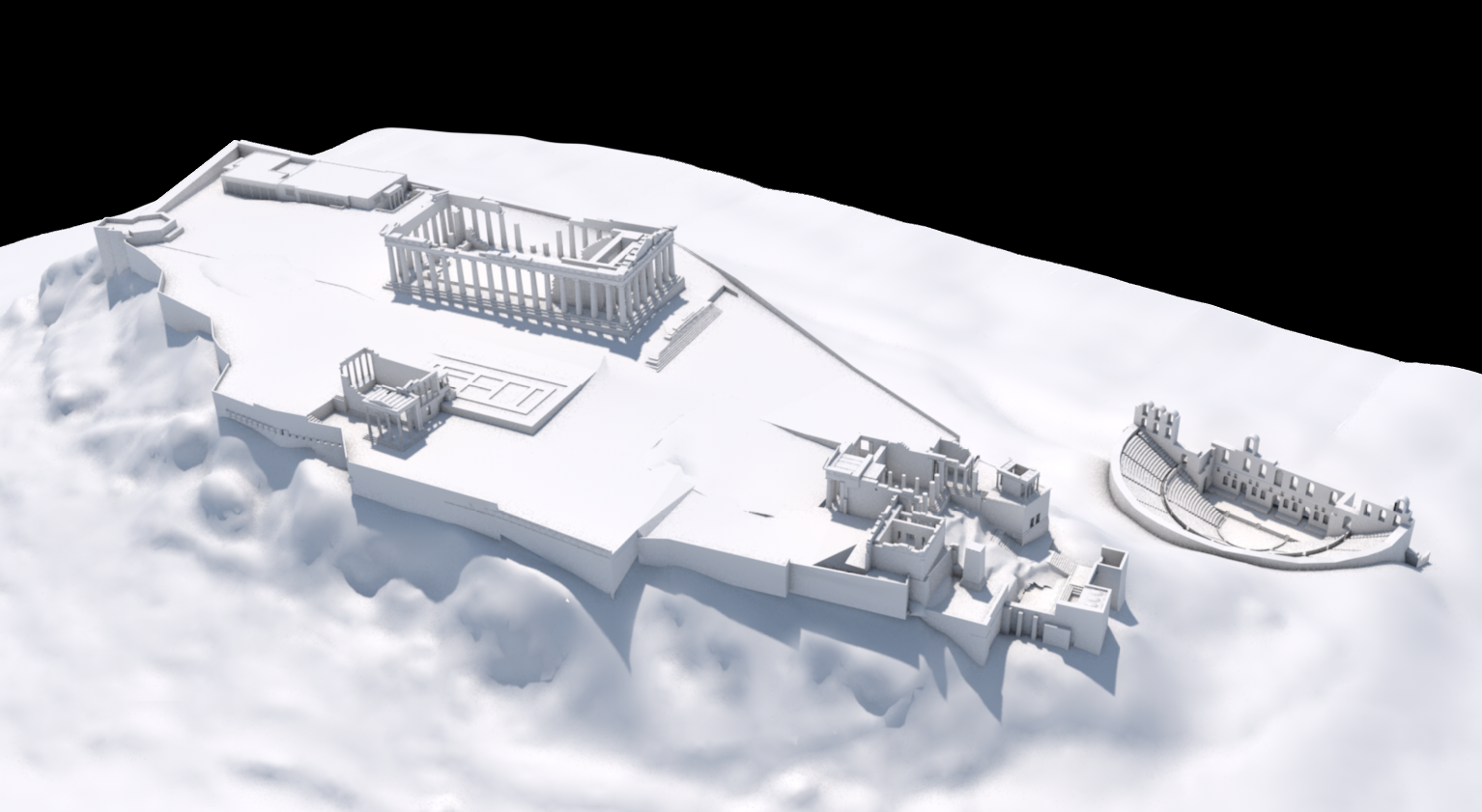
Odeion of Herodes Atticus
The first archaeological investigations at the Odeion of Herodes Atticus began in 1848 under Kyriakos Pittakis and Alexandros Rizos Rangavis. These were followed in 1857–1858 by the systematic removal of the extensive fills from the interior of the monument. In 1898, accumulations of stones and earth were removed from the cavea, gaps were filled, and retaining walls and stairways were constructed in order to restore the ancient road above the monument. In 1900, the drainage channels of the orchestra were cleared, provision was made for the discharge of rainwater, the orchestra floor was consolidated, and individual repairs were carried out on walls and doorways of the monument, while in 1938 the voussoirs of the arched openings in the upper part of the façade were completed and consolidated.
During the post-war period, from 1948 to 1967, a series of successive interventions restored the functionality of the Odeion of Herodes Atticus as a modern open-air theatre. From 1955, with the official inauguration of the annual Athens Festival, the monument became established as one of the principal venues for its events. Between 1948 and 1950, the floor of the orchestra was reconstructed, faithfully reproducing the ancient arrangement in both design and building materials, while new stone blocks and ancient architectural members were used in the restoration of the façade of the logeion. From 1951 to 1964, the cavea, with the exception of the parodoi, the diazoma and, subsequently, the epitheatre were fully refaced in new marble, providing a total of 32 rows of seats. At the same time, modern dressing rooms, bathing facilities and equipment-storage areas were constructed underground, beneath the square in front of the monument. During the same period, restoration works were carried out on the western entrance and the staircase above it, followed, between 1964 and 1967, by the restoration of the eastern entrance and its corresponding staircase. In both cases, the vaults above the entrances were reconstructed in reinforced concrete, which was plastered in order to approximate the appearance of the ancient construction.