Marble Propylon
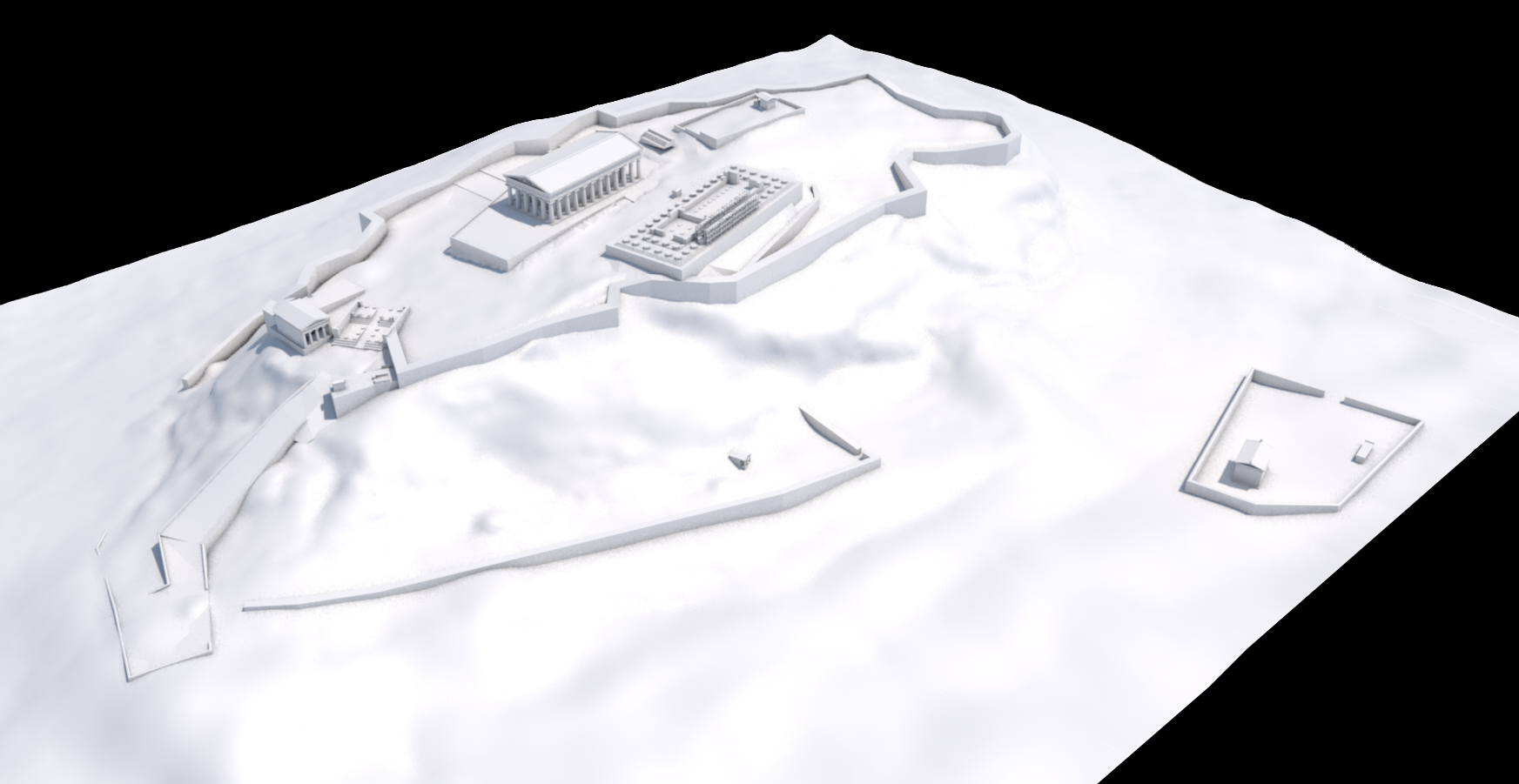
Marble Propylon
Marble propylon at the western entrance to the Acropolis, set diagonally on a southeast–northwest axis in relation to the later Classical Propylaia. Its construction began shortly before the Persian Wars or after the Battle of Marathon (490 BC), but work was interrupted around 485 BC due to a reassessment of the city's defensive needs in the face of the Persian threat. Its foundations are visible south of the Mnesiklean Propylaia. The exact form of the monument remains uncertain. According to one reconstruction, it consisted of a central structure with three columns on each side and tetrastyle in antis façades. According to another interpretation, the propylon of this period was a double, distyle in antis structure. The Archaic arrangement of the entrance was complemented to the south by a stepped platform with marble facing and seats along the Mycenaean wall, and to the north by an apsidal poros building of the Doric order. The propylon suffered significant damage during the Persian sack of 480 BC and was subsequently repaired to serve the cultic needs of the Sacred Rock. According to a more recent hypothesis, it was probably dismantled at the beginning of the Periklean building programme in order to facilitate the transport of marble blocks onto the Acropolis.