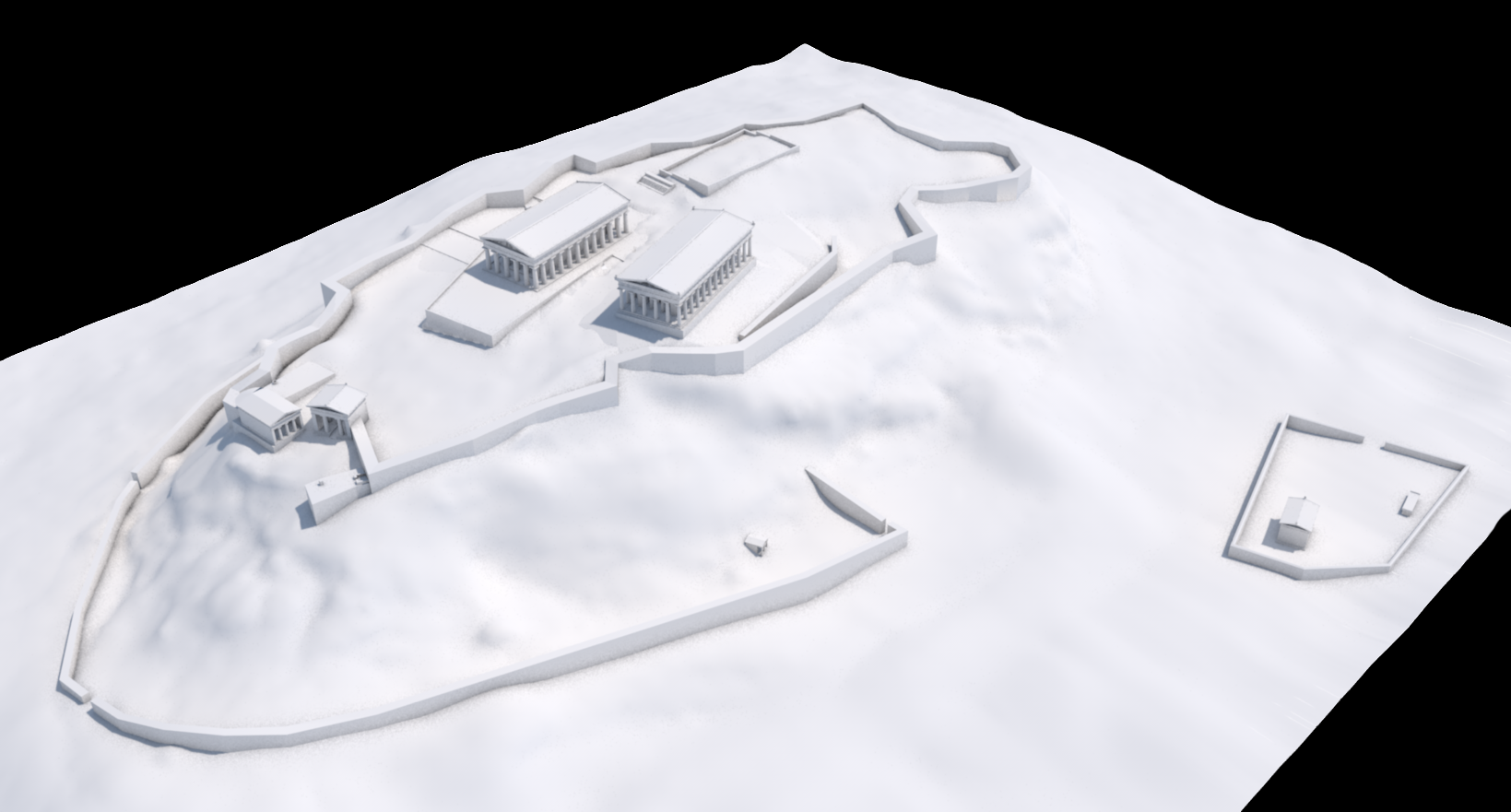
Cistern north of the Propylaea
Cistern north of the Propylaea
Rainwater cistern, constructed after the expulsion of the Peisistratids (510 BC), east of the Archaic Propylon. It had a trapezoidal plan and consisted of two adjoining chambers of different dimensions and capacities, one to the east and one to the west, separated from one another by a partition wall and covered by a single flat wooden roof. It was supplied by a conduit cut into the natural bedrock, which collected rainwater. Inside the cistern, a wall built of reused poros blocks formed the continuation of the conduit and directed the water to the lower part of the eastern chamber, which functioned as a settling tank. As the water level rose, the clarified water overflowed the partition wall and passed into the western chamber. The interior surfaces, both the rock-cut sections and the built poros masonry, were coated with two layers of waterproof plaster. Special openings allowed the two chambers to be cleaned periodically, while the installation as a whole ensured a supply of drinking water on the Acropolis. The cistern was destroyed during the Persian invasion of 480 BC.