Archaic Fountain
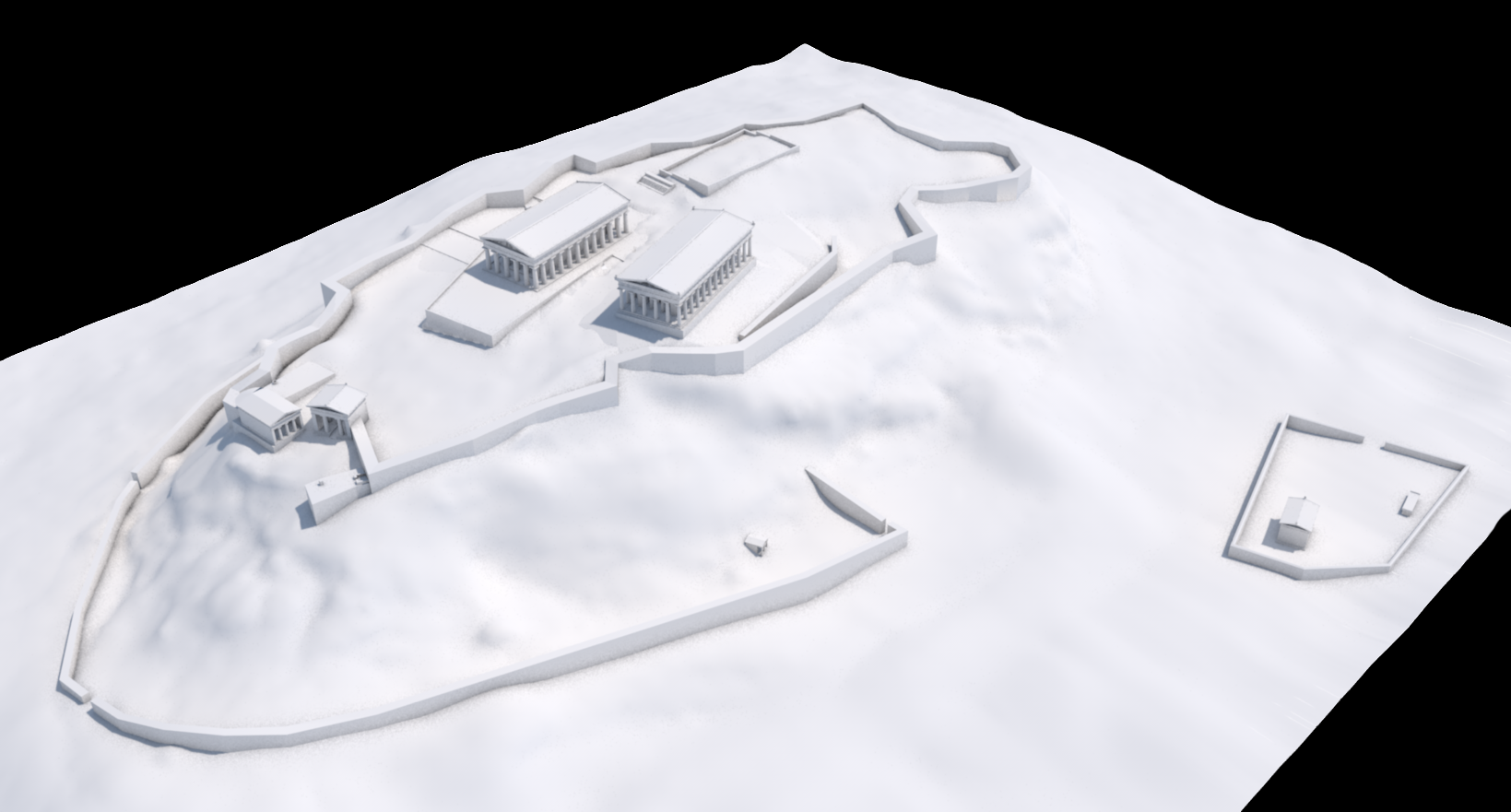
Archaic Fountain
Archaic fountain house of the late 6th century BC on the south slope of the Acropolis, west of the later Ionic stoa of the Asklepieion. The structure contained a draw basin with walls built of carefully laid polygonal limestone masonry. At its bottom was a small circular well 1.25 m deep, with masonry walls and a small opening to the south through which water entered from the underground spring. The above-ground walls of the fountain house were built of Acropolis limestone. Very little survives of its superstructure. According to one reconstruction, a small Doric stoa stood in front of the fountain house, with three columns on the façade and one additional column in antis. The area belonging to the fountain house was bounded by a boundary stone dating to around 420 BC, found in situ and inscribed ΗΟΡΟΣ ΚΡΗΝΗΣ (“Boundary of the Fountain”). A second, fragmentary boundary stone bearing the same inscription was also found in the area in secondary use. The fountain house and its immediate surroundings were associated with the cult of the Nymphs, as attested by the numerous votive reliefs found in the area.